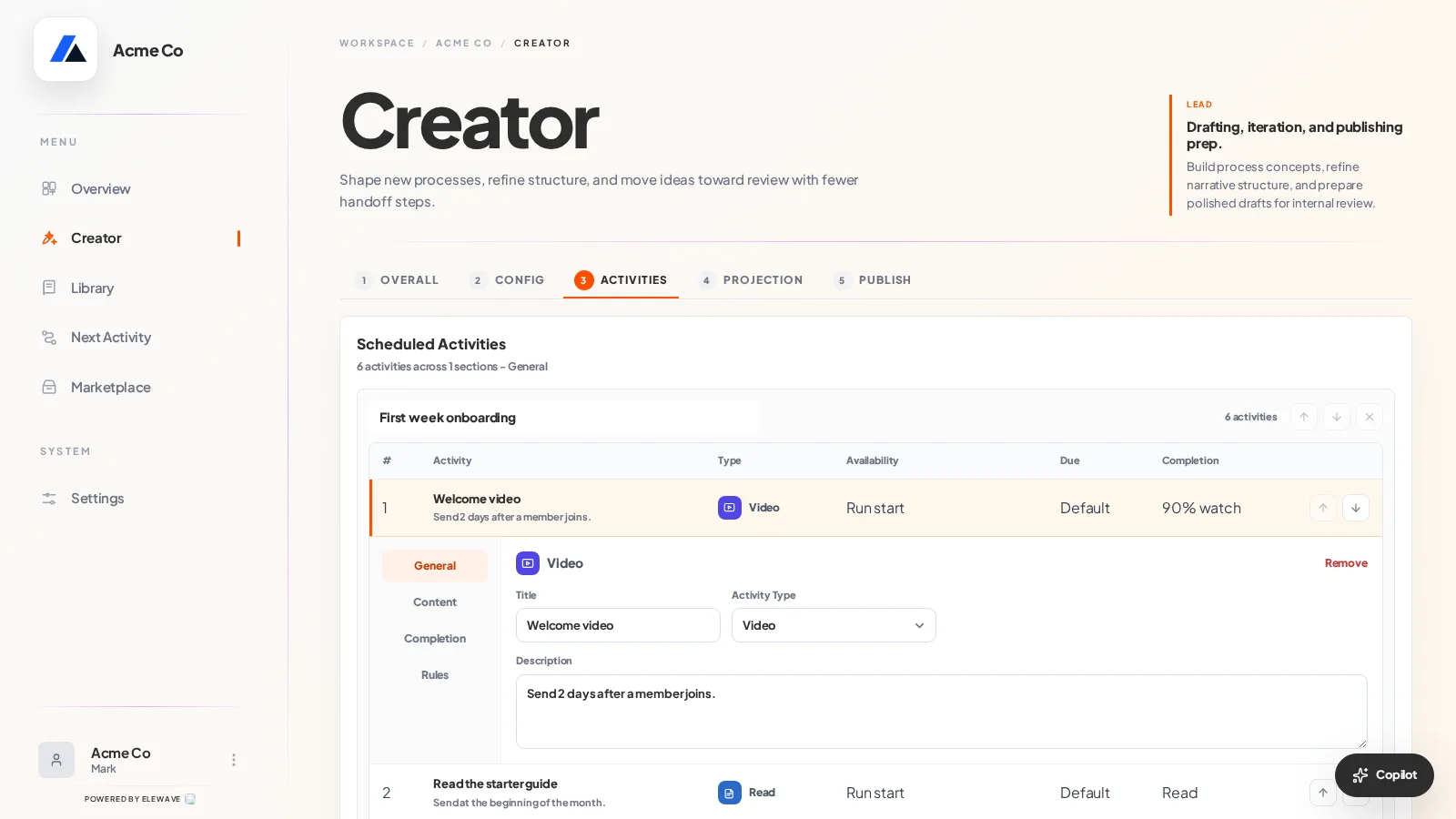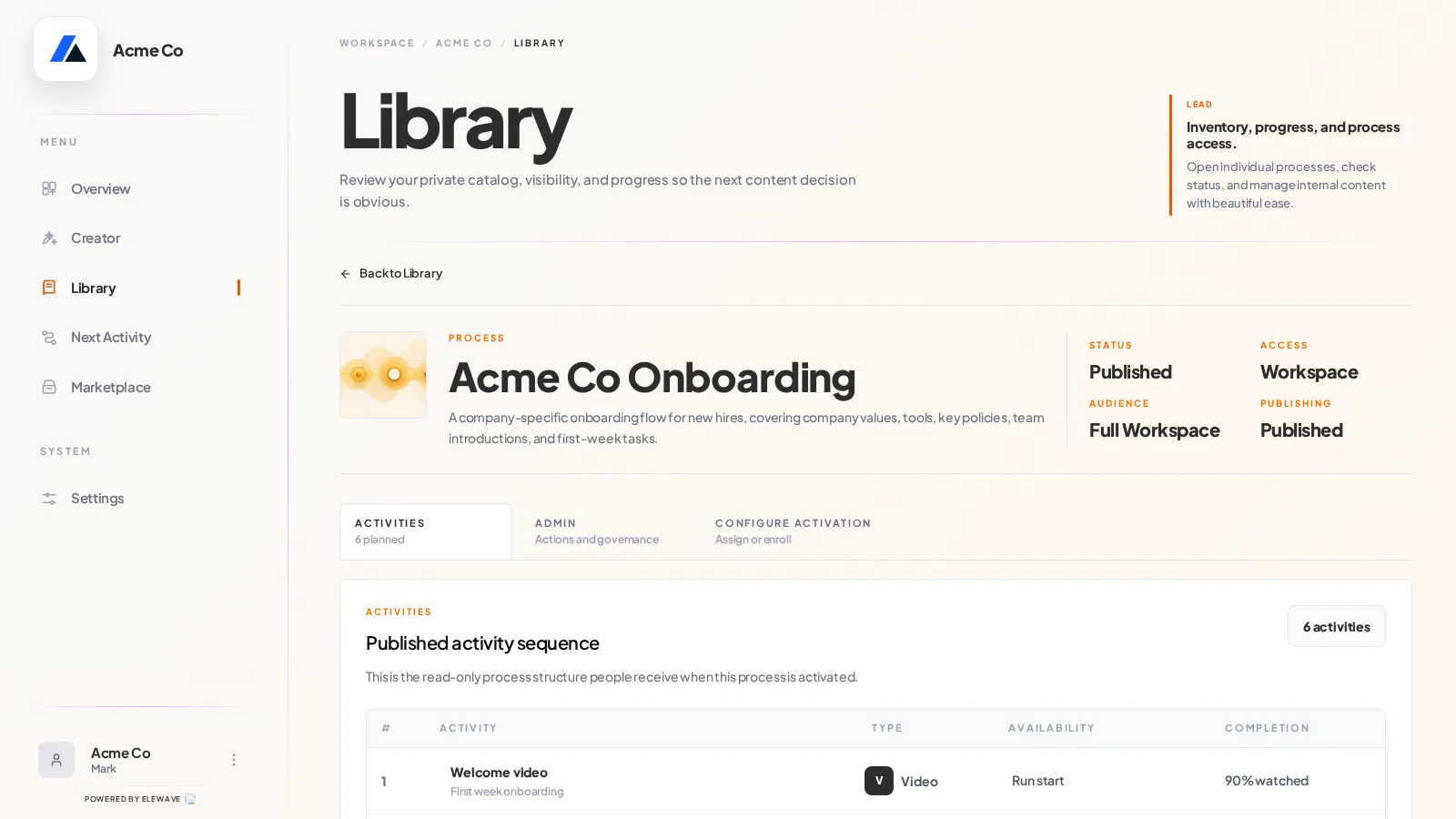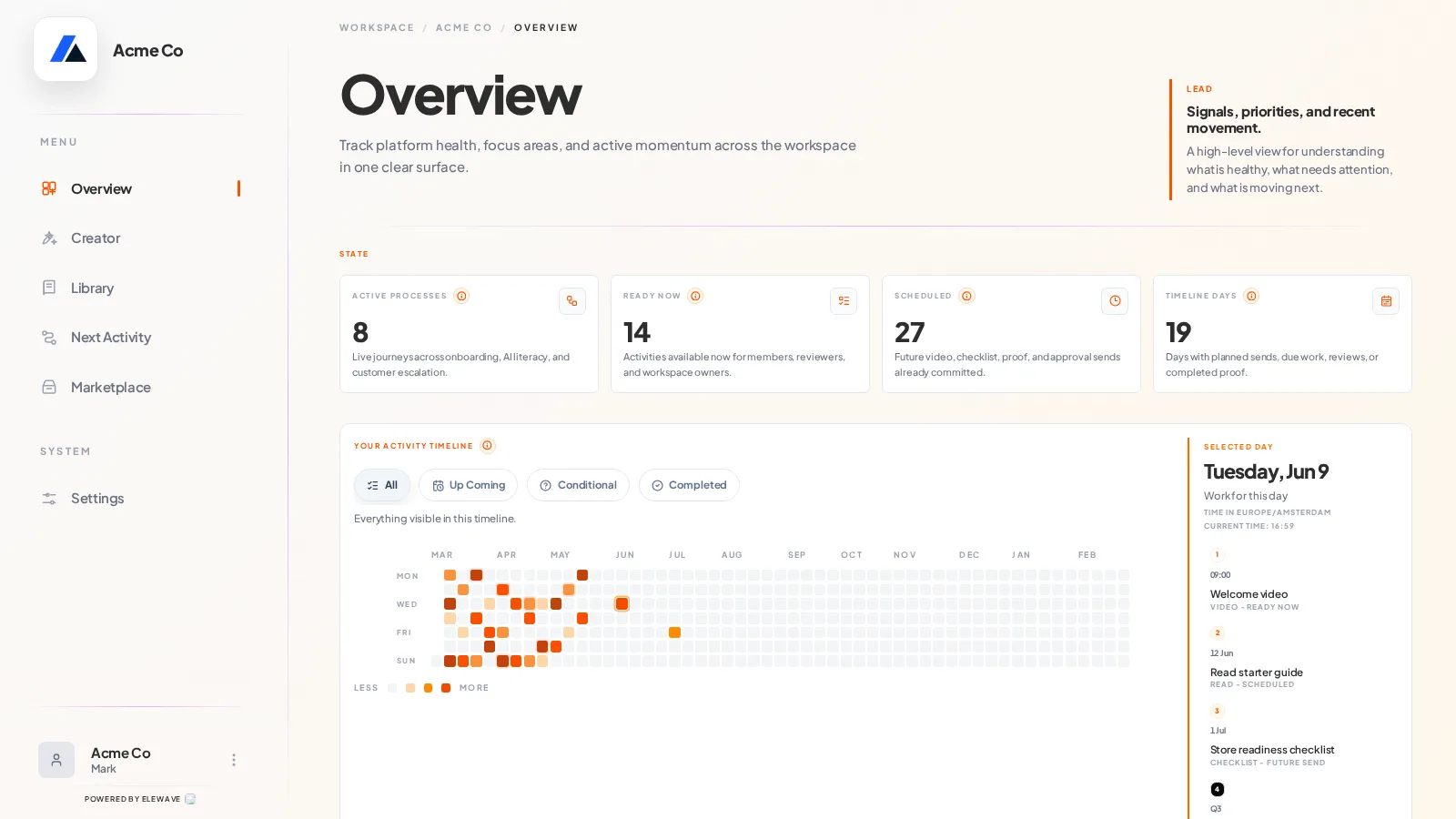
Documents explain the work. Calendars remind people. Chat gets attention. None of them, alone, makes repeatable work happen reliably.
The problem is not knowledge
Most teams do not fail because they lack instructions.
They have SOPs, onboarding videos, training decks, member guides, policy pages, launch checklists, and client handoff notes. The knowledge exists. The problem starts after the knowledge is shared.
Someone has to remember the next step. Someone has to know when it is due. Someone has to collect proof. Someone has to review the exception. Someone has to chase the person who missed it.
That is the follow-through gap.
Work needs to arrive
A better operating system does not ask people to search for the process every time.
It brings the next activity to the right person when the work should happen. It keeps the instruction, owner, timing, completion rule, proof, and review path together.
That is the follow-through layer EleWave is built for.
- A new hire gets the right activity on day one.
- A member receives the next prompt three days after joining.
- A restaurant shift lead sees the food-safety check at the right time.
- A reviewer gets an approval request with the evidence attached.
- A manager sees what slipped before the process disappears.
The user sees a simple next step. The team sees the operating state behind it.
Less chasing. More momentum.
When repeatable work has timing, ownership, and proof built in, managers spend less time reconstructing what happened. People know what matters now. Reviews stay connected to the request. Completion becomes explainable.
The goal is not more process. It is calmer execution.
Work arrives. People act. The record stays clear.